Kusamaki bonsai
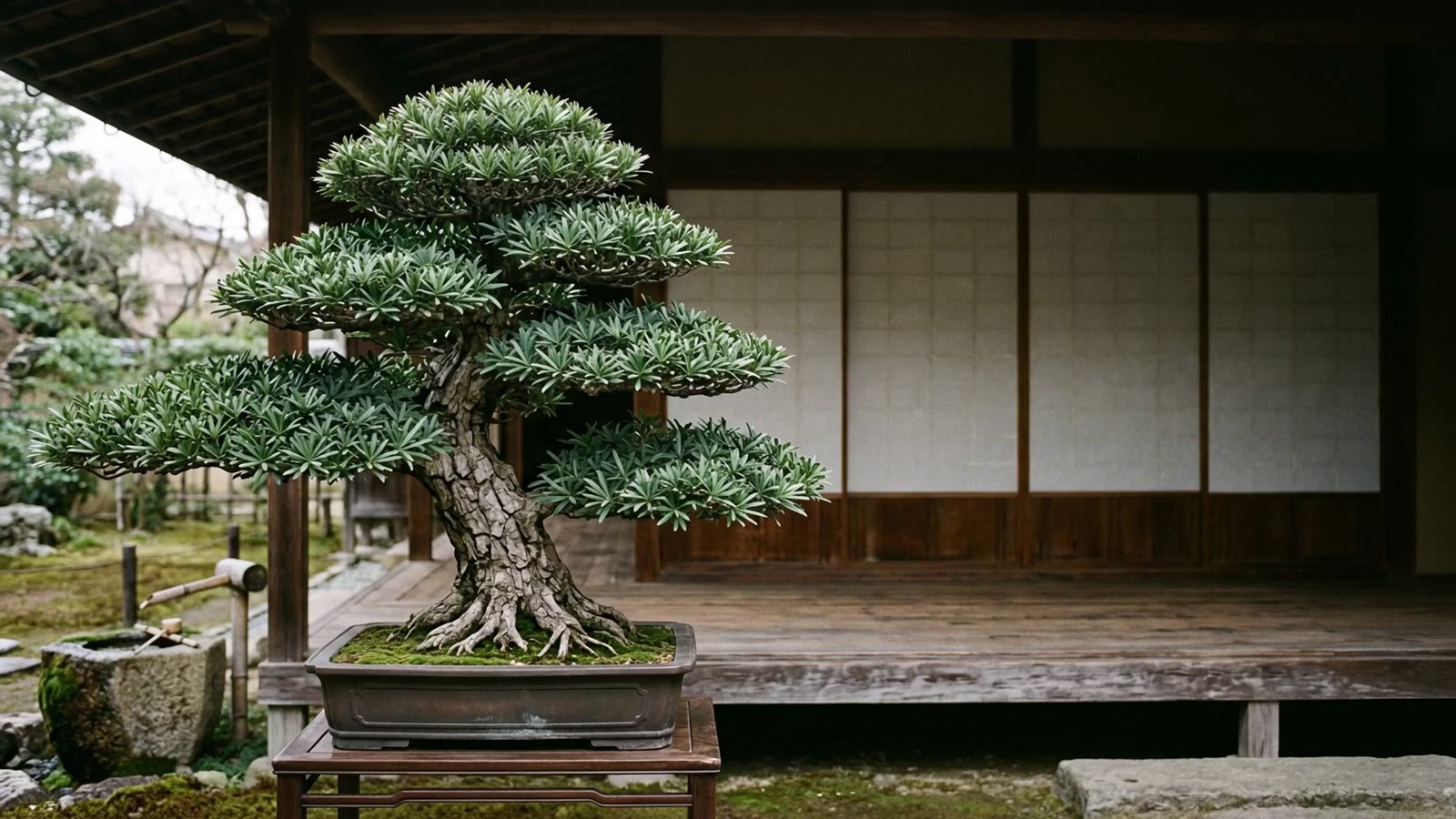
Kusamaki is Podocarpus macrophyllus var. maki — the podocarpus with the longest and most established history as bonsai material.
What it is
The maki variety differs from the type: shorter, blunter leaves held more densely, and a tidier columnar habit. Those differences are exactly what make it suited to a pot.
How to recognise it
- Leaves 5–7cm, shorter and blunter than the species type.
- Arranged spirally in dense whorls toward the branch ends.
- Matte deep green above, with a pale glaucous underside.
- Stiffly upright, tending columnar.
- Grey-brown fibrous bark with shallow vertical fissures.
Classical styling
Its upright habit and tight ramification make kusamaki the natural subject for chokkan (formal upright) and moyogi (informal upright). Dense foliage pads are straightforward to maintain with routine pinching.
It takes wire more readily than the other two, but the bark marks easily. See the wiring guide for protection technique.
Care specific to this variety
- The most shade-tolerant of the three.
- Excellent back-budding, so old trunks can be rebuilt from scratch.
- Grows year-round in the Javan highlands; no dormancy.
Provenance and propagation
Kusamaki strikes readily from cutting and grows reasonably fast, so quality material is available without touching wild trees. Most of our stock is five to twelve years from cutting.